
Key Takeaways
- An oral cancer screening is a quick look and feel check of your mouth, jaw, and neck.
- It’s part of your regular checkup, so it happens without any prep or separate request.
- The exam takes a few minutes and is painless.
- Many findings turn out to be harmless, and a biopsy is the test used to confirm a diagnosis.
- Book a visit if a sore or lump in your mouth lasts longer than two weeks or worsens between checkups.
Between meetings, deadlines, and family schedules, your dental checkup can feel like one more box to tick. At Pinnacle Dental, the team wants you to know what happens during each part of that visit, including a short step many people never notice, the oral cancer screening.
An oral cancer screening is a quick, painless check where the dentist looks at and feels your mouth, jaw, and neck for sores, patches, lumps, or other changes. It happens during your routine exams and cleanings at Pinnacle Dental, so it fits into the time you’ve already set aside.
What Is an Oral Cancer Exam?
Think of it as a quick look and feel check. When you visit a dentist in Calgary for your regular exam, the screening is built right in. There’s no special prep and no separate request. You simply sit back while the dentist takes a careful look.
Areas the Dentist Checks
The dentist works through your whole mouth and the areas around it. Here’s what gets checked:
- Your lips, tongue, cheeks, and gums.
- The roof and floor of your mouth, plus your throat.
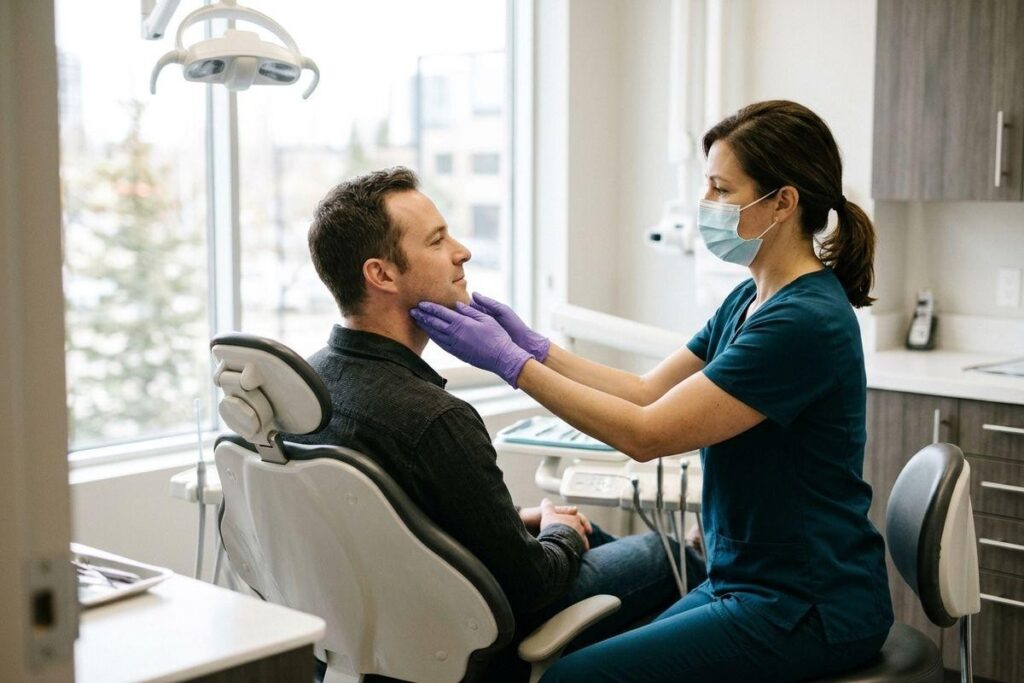
- Your jaw, neck, and glands, where the dentist feels for unusual bumps.
How Long It Takes & How It Feels
The whole check takes only a few minutes. It’s painless, and many people don’t even realize it’s happening because it blends into the rest of the exam.
What to Expect at Your Dental Visit
Part of Your Regular Checkup
Your visit usually starts with a review of your dental and medical history. Mention any new medications, health changes, or habits, since these details give the dentist a fuller picture. The screening then happens alongside your exam and cleaning.
If you’re curious, ask the team to walk you through each step.
The Look & Feel Steps
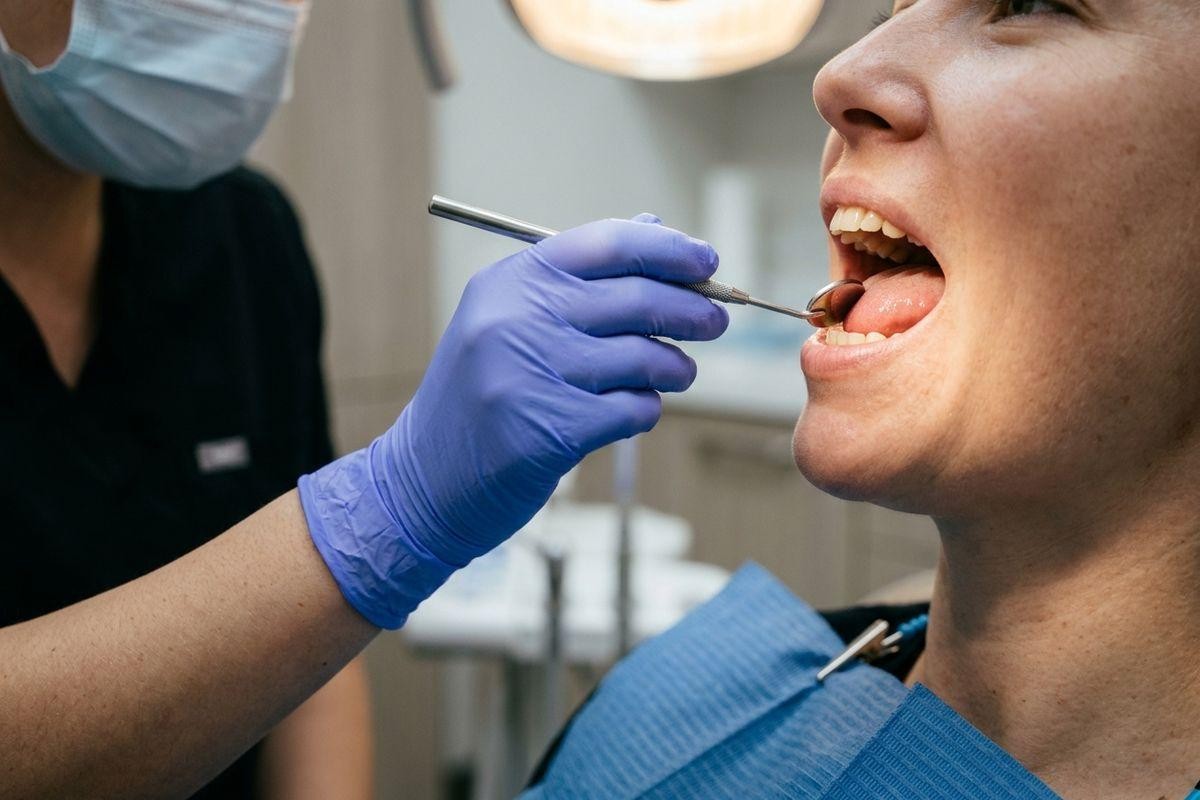
First, the dentist looks for sores, patches, or changes in colour or texture. Next comes a gentle touch along your jaw and neck to feel your lymph nodes, the small glands under your skin. Some dental offices also use special lights or dyes to get a closer view.
Signs & Risk Factors to Watch For
You see your own mouth every day when you brush, so you’re often the first to spot a change.
Signs to Notice in Your Mouth
Keep an eye out for these signs:
- A sore or patch that doesn’t heal within two weeks or gets worse.
- Red, white, or grey patches inside your mouth.
- A lump or an area of thick tissue.
- Trouble swallowing, an ongoing sore throat, or hoarseness.
Common Risk Factors
Some habits and health factors can raise your risk. These include tobacco use and heavy alcohol use. Certain strains of HPV, a common virus, are also linked to oral cancer. Sun exposure to your lips, age, and a past history of oral cancer round out the list.
Knowing your risk factors helps you and the dentist decide what to watch most closely.
What Happens If the Dentist Finds a Concern?
Calm, Clear Next Steps
Hearing that the dentist spotted something can feel unsettling, but many findings are harmless, like canker sores. Often, the next step is a few questions, a photo of the area, or a follow-up visit to see whether it has changed. You also get time to ask questions before you decide anything.
How Oral Cancer Is Diagnosed
The dentist’s role is to spot changes. Testing is what confirms a diagnosis. If an area needs a closer look, the dentist may refer you to an oral surgeon. The test used to diagnose oral cancer is a biopsy, where a small tissue sample is taken and checked.
How Often to Get Checked by a Dentist
Screenings happen at your routine dental visits, so staying on track with checkups means each visit includes this check. Early checks can lead to more favourable outcomes, which makes this short step worth the few minutes it takes.
Many of the team members at Pinnacle Dental have been with the practice for over a decade, so the people checking your mouth often know what’s normal for you.
Changes You Notice Between Visits
Life gets busy, but a change in your mouth deserves attention. If a sore or lump lasts longer than two weeks or worsens, book a visit right away. There’s no need to wait for your next checkup.
Book Your Next Checkup With Pinnacle Dental
An oral cancer screening is a small part of your visit that can give you real peace of mind. At Pinnacle Dental in Victoria Park, the team takes the time to explain what they see and answer your questions in plain language.
If you’re looking for a dentist in Calgary who fits care into your busy schedule, book your next checkup with Pinnacle Dental today.