

Picking the right toothbrush is a simple step that helps your family maintain great oral health through consistent preventative dental care. With so many options available in stores, it can be hard to know what to look for, especially if you’re choosing for different family members.
The most suitable toothbrush for most families has soft bristles, a comfortable handle, and a head size that fits easily in your mouth. For personalized advice, you can always schedule an appointment with our team. At Pinnacle Dental, we would be happy to talk about what can work for you or your loved ones.
Start with the Bristles: Soft, Medium, or Firm?
The type of bristle is one of the most important factors when you select a toothbrush. You’ll typically see soft, medium, or firm options on the shelf. This choice can directly affect how the brush feels on your teeth and gums.
Why a Soft Bristle Brush Is a Family-Friendly Choice
Most dentists suggest using a toothbrush with soft bristles because they are flexible enough to clean plaque and food particles from your teeth without being harsh. They are a gentle and effective option for both children and adults, helping to protect your gums and tooth enamel from unnecessary wear.
A Note on Medium & Firm Bristles
While some might think firmer bristles clean better, they can be too abrasive for daily use for some people. Brushing too hard with medium or firm bristles may lead to gum irritation or damage your tooth enamel over time, issues that may require periodontal care. For this reason, a soft-bristled brush is almost always the recommended choice for the whole family.
Manual vs. Powered Brushes
The choice between a manual and a powered toothbrush often comes down to personal preference and your family’s specific needs. While both manual and powered toothbrushes can clean teeth effectively when used correctly, they have different advantages. One is not automatically better than the other: It’s about what works for you.
The Benefits of a Manual Toothbrush
Manual toothbrushes are simple, affordable, and easy to find in any store. They give you full control over pressure and motion while you brush, allowing for a gentle touch. With proper technique, a manual toothbrush is an excellent and reliable tool for daily oral hygiene.
Consider a Powered Toothbrush
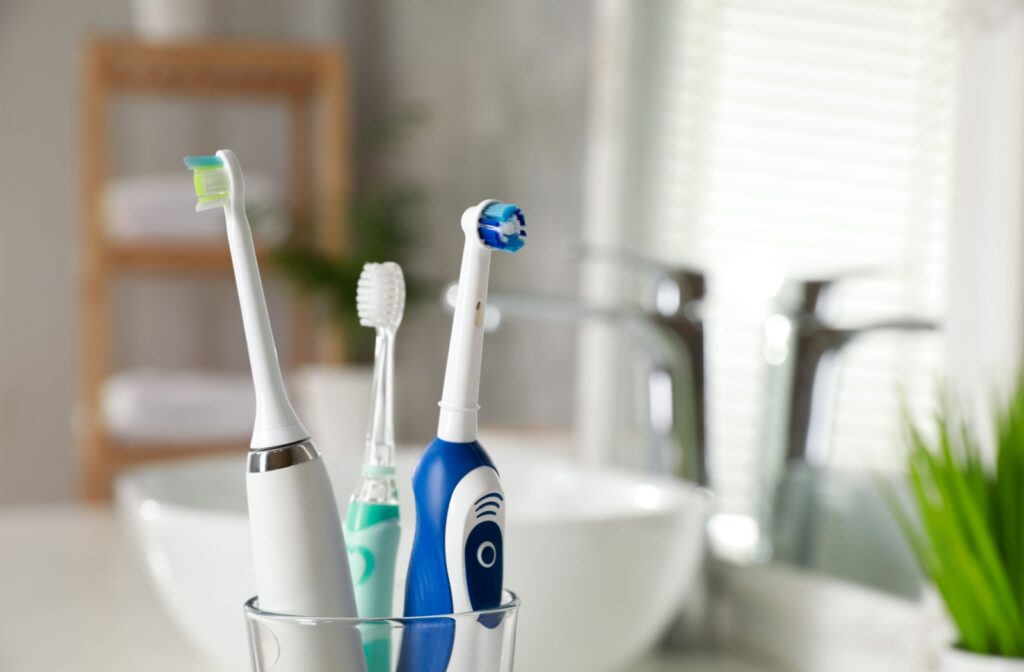
A powered toothbrush can be a great option for those who need a little extra help with their brushing routine. The rotating or vibrating heads do some of the work for you, which can be helpful for people with dexterity challenges. Many models also include built-in timers to help you or your kids brush for the full two minutes.
Key Features to Check for Any Toothbrush
Beyond the bristles and power source, a few other design elements can make a toothbrush more comfortable and effective for your family. Paying attention to the head and handle can make a big difference in the daily brushing experience.
The Right Head Size & Shape
Choose a toothbrush head that fits comfortably in your mouth and can easily reach all your teeth, especially the back ones. A compact head size is often a good choice for both adults and children because it’s easier to move around tight spaces. This helps you clean every tooth surface thoroughly.
A Comfortable Handle
Look for a handle that is easy to grip and feels secure in your hand. A comfortable, non-slip handle gives you better control while brushing. This is particularly important for parents who help their children and for kids who are learning to brush on their own.
Toothbrush Care & Replacement
Proper toothbrush care helps keep your brush clean and effective. It’s also important to know when it’s time for a new one to maintain good oral hygiene. These habits, combined with proper flossing and brushing techniques, are essential for preventing plaque buildup.
Keep Your Toothbrush Clean
Follow these simple tips to maintain your toothbrush:
- Rinse the bristles with tap water after every use to remove leftover toothpaste and debris
- Store the toothbrush in an upright position where it can air dry completely
- Avoid sharing toothbrushes to prevent the spread of germs between family members
Know When to Replace Your Toothbrush
You should replace your toothbrush about every 3–4 months. It’s also time for a new one if the bristles look frayed, worn, or matted, as they may not clean effectively. After anyone in the family has been sick, it’s a good practice to replace their toothbrush to support a healthy recovery.
Brush Technique for a Healthy Smile
The right toothbrush works well when paired with a solid brushing routine. Following a few simple guidelines can make a big difference for your family’s oral health. Consistent habits are the foundation of a healthy smile.
The 2-Minutes, 2-Times-a-Day Rule
For effective plaque removal, brush your teeth 2 times a day for 2 minutes each time. This gives you enough time to clean all the surfaces of your teeth thoroughly. Using a timer can help everyone in the family (especially kids) stick to this habit.
A Simple Brush Technique
Hold your toothbrush at a 45-degree angle toward your gumline. Gently move the brush back and forth in short, tooth-wide strokes.
New Brush, Same Dentist
Every smile is unique, and what works for one person might not work for another. During your next visit, feel free to ask for a personalized recommendation. Our dental team can review your family’s oral health and suggest a toothbrush that suits each person’s needs. At Pinnacle Dental, we are here to support your family’s oral health journey with practical advice and comfortable care. If you have questions about toothbrushes or any other aspect of your dental routine, we’re ready to help. Contact our team to schedule your next appointment in Calgary, Alberta.